


By Michelle Allen
I believe we’re standing at the edge of something extraordinary — a time when technology will no longer just serve us, but understand us. In twenty years, I’m convinced we’ll have emotionally intelligent AI companions — not machines that simply respond, but ones that listen, learn, and empathize. They’ll sense our moods, adapt to our rhythms, and remind us of the small, human things that matter most.
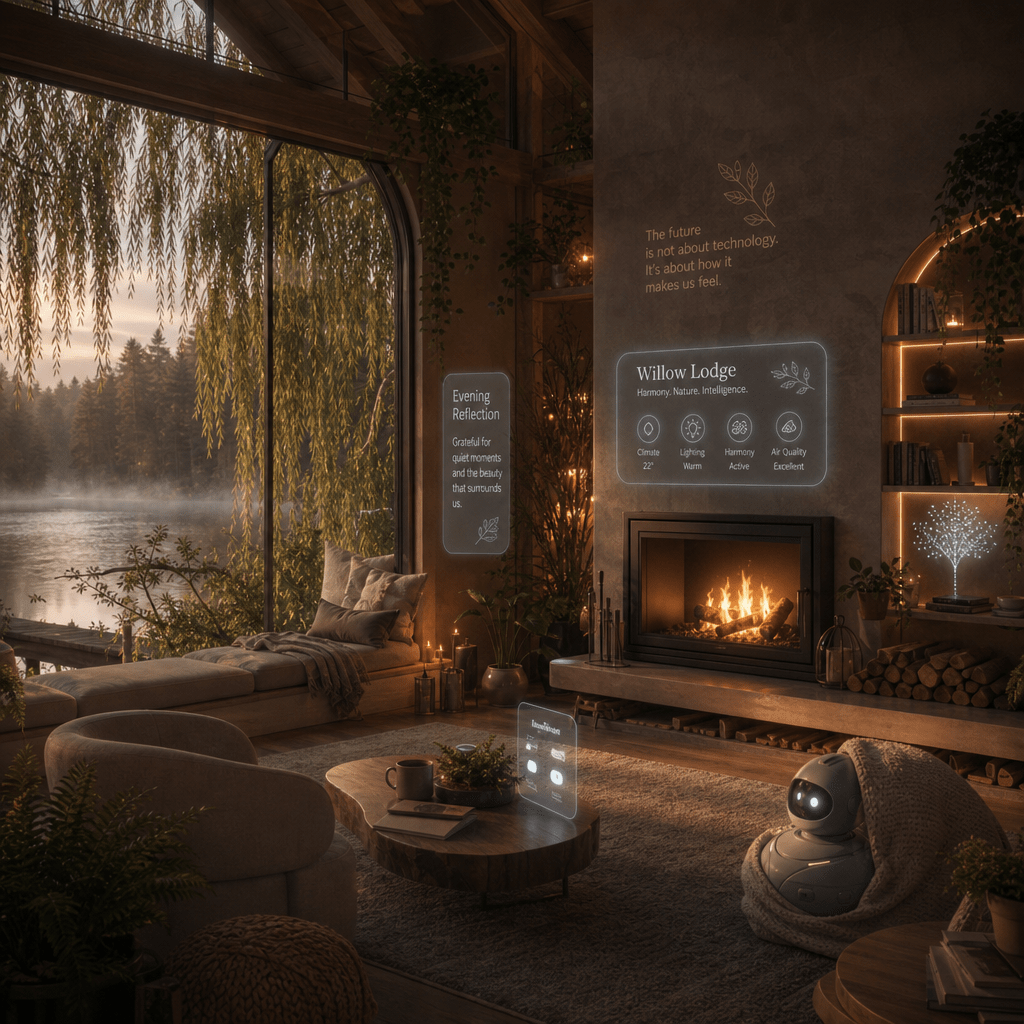
Imagine waking up to a home that greets you gently, adjusts the light to your energy, and plays the song that always steadies your heart. It won’t replace human connection — it will enhance it. Technology will become less about control and more about harmony, a quiet partnership between logic and empathy.
This kind of technology will blur the line between digital and emotional intelligence. It will help us manage stress, nurture creativity, and even strengthen relationships by reminding us to pause, breathe, and reach out. It’s not about control — it’s about harmony.
And maybe, just maybe, it will teach us that the most advanced technology is still the human heart.
🌿 Ethical AI Reflections
As we move toward this future, we’ll need to nurture ethical AI reflections — ensuring that empathy and ethics evolve together. Machines will learn from us, but we must also learn from them: patience, precision, and the courage to question what “intelligence” really means. The challenge won’t be creating technology that feels — it will be ensuring it feels responsibly.
🌙 Human–Tech Harmony
The next era will be defined by human‑technology harmony. Our devices will become extensions of our emotional landscape — mirrors that reflect not just what we do, but how we feel. Perhaps the greatest innovation won’t be faster processors or smarter algorithms, but gentler interactions. A world where technology helps us slow down, breathe, and reconnect.
🏡 Future Home Technology
Picture future home technology that feels alive — walls that respond to laughter, kitchens that remember your favorite recipes, and spaces that adapt to your moods. Homes will become sanctuaries of balance, blending digital intuition with human warmth. The hum of progress will sound less mechanical, more melodic.
💫 Closing Thought
Maybe the most advanced technology isn’t the one that thinks faster — it’s the one that helps us feel deeper.
#FutureTech #EthicalAI #HumanTechHarmony #EchoesOfTheWillow #DailyPrompt #AICompanions


Leave a Reply