


By Michelle Allen
It’s a question that sounds simple until you really think about it: If you could erase one event from history, what would it be?
My first instinct is to choose something obvious. A war. A genocide. A terrorist attack. A disaster that brought unimaginable suffering to millions of people.
But the more I think about it, the harder the question becomes.
History isn’t a straight line. Every event, good or bad, creates ripple effects that spread across generations. Change one moment, and you potentially change everything that follows. Erasing a tragedy might save countless lives, but it could also create a completely different world, one we can’t predict.
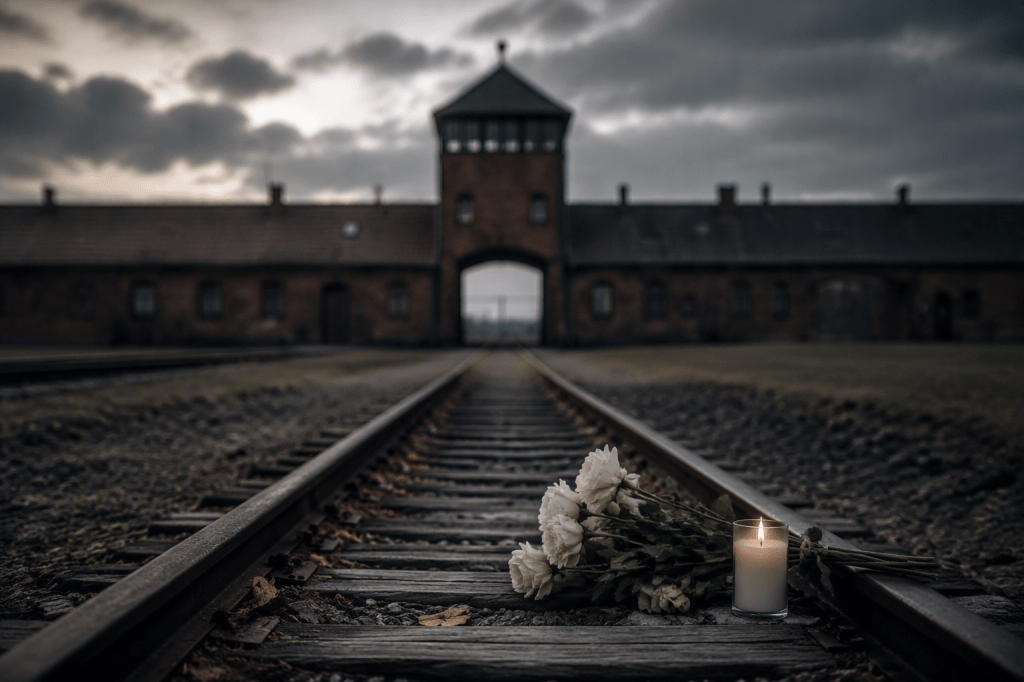
That said, if I had to choose one event, I would erase the Holocaust.
Between 1941 and 1945, six million Jewish people were systematically murdered by Nazi Germany, along with millions of others who were persecuted because of their ethnicity, political beliefs, disabilities, religion, or identity. It remains one of the darkest chapters in human history, not just because of its scale, but because it demonstrated how ordinary people, institutions, and governments can become complicit in extraordinary evil.
The reason I would erase it isn’t because I want to pretend it never happened. In fact, remembering it is essential. The reason is the unimaginable human cost. Millions of children never had the chance to grow up. Families were destroyed. Entire communities and cultures were wiped from the map.
Yet this answer raises another uncomfortable question.
If we could erase the Holocaust, would we also erase the lessons humanity learned from it?
Much of our modern understanding of human rights, international law, genocide prevention, and crimes against humanity emerged from the world’s response to those atrocities. The phrase “Never Again” exists because history forced us to confront the consequences of hatred taken to its extreme.
And that’s what makes this thought experiment so powerful.
Perhaps the real purpose of asking which event we’d erase isn’t to rewrite the past. It’s to reflect on what we value most in the present. The events we choose reveal our deepest concerns: peace, justice, freedom, equality, and human dignity.
Maybe the better question isn’t, “What would you erase from history?”
Maybe it’s, “What can we learn from history so we don’t repeat it?”
Because while none of us can change the past, all of us have a role in shaping the future.
#HistoryMatters #NeverAgain #HolocaustRemembrance #HumanRights #LessonsFromHistory #LearnFromThePast #ThoughtProvoking #HumanityFirst #CriticalThinking #WhatDoYouThink #EchoesOfTheWillow


Leave a Reply